Child & adolescent art psychotherapy · Dublin
Children say in images what they cannot yet say in words.
I’m Annette Kennedy. I work with children and young people in Dublin — using art, play, and conversation to help them make sense of what’s going on for them. By the time I trained as a therapist, I’d already spent thirty years around children: as a teacher, in hospital wards, and as a volunteer who kept showing up for them.
- Training MSc Child Art Psychotherapy — University College Dublin, based at St Vincent’s University Hospital
- Clinical placements CAMHS (2019–2021) and Tusla, the Child and Family Agency (2021–2023)
- Before that Special education and mainstream teaching, and three decades of work with children and young people
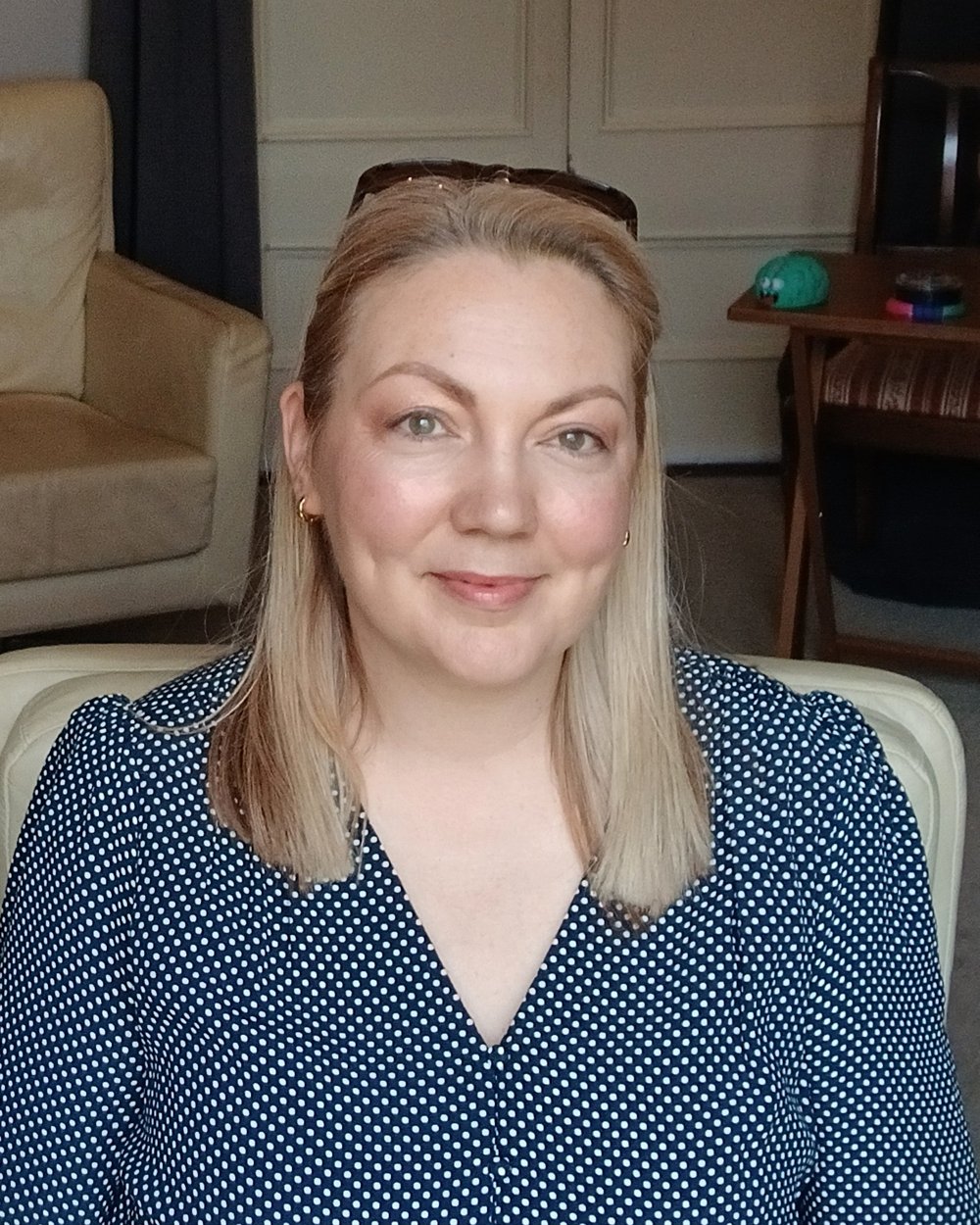
Who I am
I came to this work the long way round
I qualified as a child art psychotherapist after a working life already spent with children — as a mainstream teacher, as a special education teacher, and, across three decades, as a volunteer.
That order matters. Before I ever sat with a child in a therapy room I had sat in the staff room, in the IEP meeting, and in a classroom at half two on a wet Thursday. I know what a school can and cannot do, and I know the system a family here has to navigate — the GP, NEPS, CAMHS, Tusla, and the school itself.
Thirty years in, the part that has never changed is watching a child, or a class, or a parent turn out to have far more capacity than anyone had expected of them.
Finding the key to mutual understanding has been the core value running through all of my work with children and families.
Practice & approaches
What actually happens in the room
There are three presences in an art psychotherapy session: the child, the therapist, and the thing the child makes. That third presence does a great deal of quiet work. A child who goes silent under direct questioning will often keep talking while their hands are busy. And an image can hold a feeling that is still too big, too mixed, or too frightening to name out loud.
Nothing has to be explained. Nothing has to be finished, and nothing has to be good.
The materials. Paint, clay, chalk and oil pastel, collage, sand and small figures, puppets, paper of every size. Children choose — and sometimes the choosing is itself the session.
The frame. Same room, same day, same hour, week after week. For a child working something out, that predictability is not a scheduling convenience; it is part of the treatment.
Confidentiality. What a child makes and says stays in the room, within the limits every therapist has around safety. Those limits are explained to your child in words they can understand, at the very beginning — and to you.
What I draw on
-
Child art psychotherapy
The primary frame, and my clinical training. Image-making carries the work alongside talking, in whatever ratio suits the child in front of me.
-
Psychodynamic thinking
Attention to what a child is showing rather than only to what they say, and to the patterns that repeat. This is the tradition my placements in CAMHS and Tusla were rooted in.
-
Psychoeducation
Plain explanation — to a child, to parents, to a staff room — of what is happening and why. Often the single most useful hour in a piece of work.
-
Work with the adults
Children live in families and go to schools. Change tends to hold when the adults around a child can read what they are seeing differently.
Background & qualifications
Thirty years, and one thread
Classroom, clinic, private practice. The roles have changed a good deal; witnessing children grow into more of themselves is the part that never has.
- 2023 — presentChild & adolescent psychotherapist · Private practice, Dublin
- 2025 — 2026Infant Mental Health Network Committee · youngballymun
- 2021 — 2023Child art psychotherapist, clinical placement · Tusla — Child and Family Agency
- 2019 — 2021Child art psychotherapist, clinical placement · CAMHS
- 2019 — 2023Special education teacher
- EarlierMainstream teaching · State examinations superintendent · training and advisory roles in the financial sector · art camp leader · three decades of voluntary work with children
Training & education
- MScChild Art Psychotherapy · University College Dublin, based at St Vincent’s University Hospital
- 2015English, Theology & Education · Mater Dei Institute of Education, Dublin City University
- Further studyPsychology; Philosophy · Trinity College Dublin
Outside the practice: president of a Rotary club, a soprano in a choir, and once raised €5,000 walking the Great Wall of China alongside visually impaired trekkers for Fighting Blindness.
CAP · Child & Adolescent Psychotherapy
Get in touch
The first step is a short conversation
Ring or email, and we will arrange a brief call at a time when you can talk freely.
Helpful to include in a first message
- Your child’s age
- What has been happening, in a few lines
- How long it has been going on
- Anyone else already involved — GP, school, CAMHS, NEPS
- Two or three times you are free for a short call
Please do not send detailed personal or clinical information by email until we have spoken.